People usually reserve a first aid course after something has actually trembled them. A scare with a kid. A coworker breaking down at the office. A story on the information that is a little also easy to envision in your home or in the office.
Then real life hinders. Job, kids, commuting, rosters. The concept of investing a complete day or 2 in a class for first aid training silently falls the list.
That gap in between good intentions and useful truth is exactly where fast first aid courses, express first aid training, and fast CPR courses have expanded. Succeeded, they give people the crucial skills to act in an emergency, in a fraction of the moment of conventional programs. Done severely, they create a false sense of self-confidence without enough depth.
The distinction between the two is not luck. It is design.
What "fast" really means in first aid and CPR training
When people search for a "fast first aid course near me" or "express cpr course", they generally have 3 restraints: time, convenience, and a demand for a legitimate first aid certificate. Suppliers respond with formats that press in person time without reducing the required content.
Fast first aid training normally accomplishes this in several ways:
Pre course online discovering that covers theory. Shorter, focused in‑person sessions for sensible skills. Smarter scheduling, such as evenings, weekends, or split sessions. Streamlined evaluation systems that stay clear of downtime in class.A standard first aid and CPR course that as soon as took a full day or more can frequently be completed in a half day on site, with 2 to 4 hours of on-line work done ahead of time. Express first aid courses press also harder on that particular version, intending to get participants assessed and accredited in the shortest sensible timeframe.
From a regulative viewpoint, this serves as long as:
- total discovering and practice time still satisfies the proficiency requirements assessments are robust practical parts, like breast compressions or bandaging, are finished face to face and observed
Where faster ways sneak in is when service providers try to reduce not only seat time yet total knowing time. That is when rate stops offering safety.
Why rate issues, and when it does not
Over the years I have actually trained white-collar worker, child care team, lifeguards, construction teams, and parents. Various groups feel the stress of time in various ways.
A child care centre attempting to lineup a whole group with an express childcare first aid course can not simply close for a day. Rotating personnel via a fast first aid course that works on a weekend break or evening makes the distinction in between conformity and constant stress.
Similarly, a business with shift employees may discover it far less complicated to set up brief express cpr training sessions back‑to‑back, instead of one lengthy course that encounter manufacturing schedules.
Speed matters in at least 3 useful ways.
First, it decreases the barrier to access. Someone is more probable to complete first aid and cpr training classes that fit into half a day of leave, rather than a complete day plus travel.
Second, it supports organisations with high turn over. Friendliness, retail, and some medical care functions have consistent staff changes. Fast certification styles allow new personnel gain a first aid certificate or complete a fast cpr correspondence course without waiting months for a full‑day program.
Third, quicker courses are typically a lot more focused. With concept took care of online, classroom time can be practically totally hands‑on: CPR training on manikins, exercising recuperation positions, dealing with choking, and rehearsing situations like seizures or significant bleeding.
Where speed does not matter is in the discovering procedure of the human remaining in front of you. The heart of first aid training is not the slide deck or the ticking of a compliance box, it is getting a person to the factor where they can get rid of adrenaline, remember the steps, and dedicate to acting.
That takes repetition, conversation, and a possibility to make mistakes in a secure setting. The very best fast first aid courses style for that, instead of ignoring it.
How fast first aid courses are structured
Different providers bundle things differently, however many fast first aid course formats share a couple of features.
Usually, an enrollee gets on-line accessibility to pre‑course products. This could be a mix of reading, brief videos, and quiz inquiries. For an integrated first aid and cpr course, that on the internet element often covers:
- basic makeup and physiology the DRSABCD or similar first response framework recognising life‑threatening problems, such as anaphylaxis, heart attack, stroke, and extreme bleeding legal and honest issues: consent, record maintaining, office reporting
The express first aid training session itself focuses on performance:
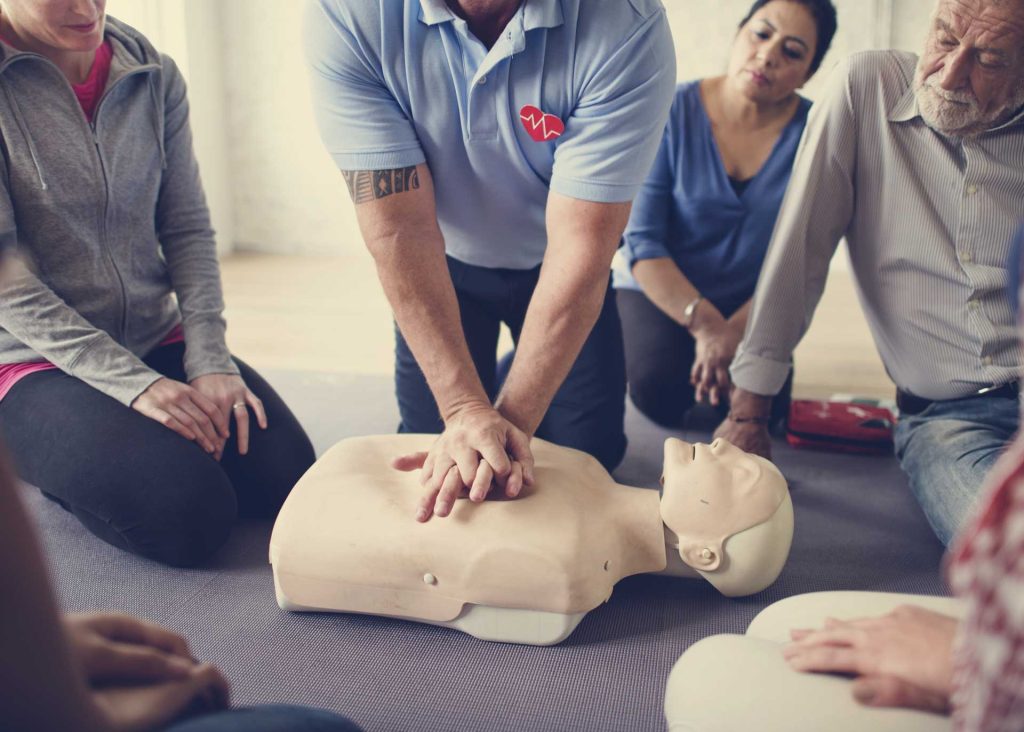
You will stoop on the flooring and execute breast compressions. You will switch roles with a companion to practice rescue breathing. You will certainly replicate situations for bronchial asthma strikes, allergic reactions utilizing sugar pill auto‑injectors, and spine precautions.
In express child care first aid training, there is an extra focus on baby and child CPR, choking in kids, febrile convulsions, and childcare‑specific reporting requirements. An express child care first aid course requires to align with local policies for very early childhood services, so it frequently really feels even more detailed than a general first aid course even in a fast format.
Assessments during a fast first aid course or fast cpr course commonly include:
- observed CPR on adult and infant manikins for a minimal number of compressions correct use an automatic outside defibrillator (AED) demonstration of bandaging, slings, and stress techniques scenario based trouble solving under time pressure
If the course is really "express" in seat time, you should anticipate that the online work is not optional. Avoiding it and wanting to coastline through on the day is a dish for frustration.
The real benefits: more than simply saving time
Time savings are obvious, but the deeper benefits of well‑designed fast first aid courses appear later on, on quieter days.
One of the best benefits is rep over a longer arc. When an organisation makes use of much shorter fast first aid training blocks and fast cpr correspondence course, they can schedule updates extra frequently. Abilities like CPR decay remarkably swiftly; studies suggest that breast compression deepness and rate weaken within a few months without practice.
With routine, quick refreshers, personnel see the product more often, even if each exposure is short. A workplace that runs a full first aid and cpr course once every 3 years frequently creates people that bear in mind "something about 30 compressions" but think twice on the information. A work environment that uses annual express cpr courses or a fast cpr refresher course commonly produces -responders that really feel extra positive with the sequence.
Another benefit is emotional: access signals concern. When a firm invests in a fast first aid course that is very easy to attend, they send a message that first aid is part of normal operations, not an extra concern. People are more likely to offer when they see coworkers relocating via fast first aid courses without it derailing their week.
There is likewise Salisbury first aid a cost angle. Shorter on‑site hours can imply lower location costs, less time far from core obligations, and less complicated rostering. That does not instantly validate a program, yet it typically makes the difference between running first aid and cpr training classes internally and outsourcing them irregularly.
For people, a fast first aid course provides a convenient way to obtain or renew a first aid certificate when life is crowded. A moms and dad, carer, or pupil may simply never ever publication a two‑day course, but will happily dedicate to a night express first aid course if it is nearby.
Where fast formats can fall short
I have actually seen fast first aid courses that left individuals energised and capable, and others that left them staring blankly when asked to recall fundamental actions by the end of the day. The superficial packaging can look the same. The difference is generally in exactly how companies work out the trade‑off in between rate and depth.
Here are the main failing points I see when speed is pressed also hard:
- Overloading the on-line element with thick, text‑heavy theory, then rushing practical work since everyone is tired. Allowing individuals to miss or skim the pre‑course needs, transforming the class into an uphill battle for both instructor and learner. Reducing scenario method to a quick demo instead of allowing people talk through what they observe, what frightens them, and just how they may respond. Treating analysis as a tick‑and‑flick exercise rather than an opportunity to remedy strategy and embed habits. Ignoring various discovering designs. Some individuals take in procedures well via analysis, others need to speak and relocate. A totally online fast first aid course that provides no in‑person method is almost always insufficient for beginners; it may work only as a theory refresher, and even after that with limits.
Fast styles magnify poor training. In a lengthy course with an unskilled trainer or a dull manuscript, there is still time to recoup. In a pressed express first aid course, there Article source is a lot less space to fix misunderstandings.
If you ever before go out of fast first aid or fast cpr training sensation more confused than when you strolled in, that course has actually fallen short you.
Matching course kind to your real‑world risks
For a white-collar worker who mainly encounters paper cuts, a general first aid and cpr course with a fast distribution format may be more than enough. For a child care educator, a straightforward fast first aid course targeted at workplaces generally might miss critical topics such as bronchial asthma administration plans, head injuries in young children, and supervision throughout outdoor play.
The right style relies on your environment and responsibilities.
An express child care first aid course makes good sense anywhere you are accountable for babies and little ones: very early understanding centres, after‑school care, trip care, community playgroups, or perhaps big household daycare settings. Express childcare first aid courses normally spend even more time on allergies, choking in kids, and child‑specific CPR ratios, and they integrate documents needs from childcare regulations.
For fitness and health experts, such as individual instructors or sports trains, fast cpr courses stressing cardiac occasions, exertion‑related collapse, and quick AED usage are often important. Some companies integrate these into sports‑focused first aid courses, again using a fast format that allows a whole group or training group train together.
In higher‑risk workplaces like building and construction or manufacturing, a fast first aid course can still work, but only if it acknowledges particular risks: crush injuries, electric cases, falls from height. A common low‑risk course provided promptly will not prepare workers for the injuries they are actually most likely to see.
When you take a look at a supplier's description, check that the material is not just "first aid and cpr" generally, yet particularly pertinent to your world.
What to try to find in a fast first aid provider
Even individuals that work in security duties confess that first aid training top quality varies commonly. 2 "express first aid courses" can wear the very same label and supply very different outcomes.
When you are choosing between programs, a short list can help:
- Accreditation and acknowledgment: Is the provider recognised by the appropriate authority in your area, and will certainly the first aid certificate stand for your industry or governing body? Delivery mix: Does the course clearly describe just how much time is on the internet, just how much is in person, and what is examined face to face (specifically for CPR training)? Trainer experience: Can you see information about who in fact teaches the first aid and cpr course, not just the organisation's name? Group dimension: How many participants per fitness instructor in functional sessions, and how many manikins are readily available? Crowded spaces waste your time. Post course assistance: Exist alternatives for a fast cpr refresher course or short practice in between formal renewals?
If you are reserving a fast first aid course near you for a team, ask straight inquiries. How much time on the floor for CPR? How many circumstances? What takes place if someone fights with the compressions or feels literally unable to do them at the standard depth? A serious carrier responses without defensiveness.

Making fast training stick: what learners can do
Fast first aid courses put more obligation on learners to prepare and examine. The benefit is that you have more control over just how much you leave the program.
Treat the on the internet pre‑course work as component of the training, not an optional additional. If the provider approximates 3 hours, spread it across a couple of nights. Make note in your very own words. Stop the videos and imagine yourself doing the steps.
During the face‑to‑face component, withstand the urge to hang back politely. Volunteer to go initially in circumstances, also if you feel awkward. Ask the awkward inquiries regarding points that stress you, such as "Suppose I damage a rib throughout CPR?" or "What happens if a parent refuses aid for their youngster?".
After you get your first aid certificate, timetable your very own method. You might not have manikins at home, yet you can speak via circumstances with household or associates. Settle on who calls for help, who brings the first aid set, that fulfills the ambulance. In a child care setup, some centres incorporate brief role‑plays right into personnel meetings, transforming express child care first aid training from a once‑a‑year event right into a continuous habit.
If your office uses express cpr courses or brief refreshers between formal renewals, treat them as non‑negotiable. 10 mins of compressions on a manikin every few months will certainly maintain your method much sharper than a single, heroic burst of method every three years.
When much longer courses are still worth it
Speed is appealing, but it is not constantly the best selection. Some scenarios require even more immersion, even more representation, and even more feedback than an express course can genuinely provide.
If you are entering a marked first aid officer duty in a high‑risk workplace, or you are all new to any kind of health or safety training, a full‑day or multi‑day first aid and cpr course can offer even more breathing time. Individuals who fear, easily bewildered, or who have language obstacles sometimes take advantage of a slower rate with more time for questions.
Advanced programs such as fap first aid (or equivalent innovative work environment response courses) usually can not be decreased to a short express layout without shedding crucial depth. These courses cover extensive analysis, oxygen therapy, progressed airway monitoring, and often remote or wilderness situations. They think a baseline of experience that a fast first aid course for novices can not provide.
There is also a social aspect. In some teams, investing a full day with each other on first aid training comes to be a common experience that builds count on. They speak extra openly about exactly how they respond under anxiety, who is most likely to ice up, and just how they can support each other. A string of fast first aid courses for spread individuals may not create that exact same bond.
The key is not to prayer speed yet to match the course format to the duties, threats, and individuals involved.
The future of fast first aid and CPR training
Over the last years, first aid and cpr training classes have changed progressively towards blended understanding: online theory plus face‑to‑face useful job. That fad will certainly continue, and fast first aid courses sit at the sharp end of it.
New systems can tape compression deepness and rate extra properly. Scenarios can be substitute with more realism. Some companies currently utilize brief video refresher courses linked to your original express first aid course, nudging you to assess vital steps at set intervals.

The question for organisations and individuals is not whether this shift is great or negative in the abstract. It is whether the particular fast first aid courses and fast cpr courses they pick maintain the core purpose: making even more individuals eager to act when an unfamiliar person quits breathing, a coworker breaks down, or a youngster chokes.
If rate serves that function, it is a present. If it weakens it, it is an obligation wrapped in convenience.
Bringing rate and security together
On a practical degree, one of the most reliable programs I see share a couple of characteristics, no matter just how they are branded:
They respect time without claiming understanding is immediate. They utilize on-line components for history, after that shield in‑person time for method, adjustment, and concerns. They structure express first aid courses so that also in a short first aid training Salisbury session, individuals obtain their hands on the devices and go through sensible events.
They straighten fast first aid training with the particular globe of the student: an express child care first aid course for educators, a small workplace first aid and cpr course for office teams, or focused fast cpr training for fitness professionals and security staff.
They treat the first aid certificate not as a finish line but as a checkpoint. There is a prepare for refreshers, whether that is a yearly fast cpr refresher course, brief tool kit talks, or casual technique in team meetings.
Most significantly, they never forget that ultimately, a fast first aid course is just effective if, at 3am in a silent residence or on a busy Monday morning in a warehouse, someone feels just certain adequate to progression, kneel close to someone in difficulty, and begin.